Governing AI deployments
with approvals and rollback.

ADLC (Agentic Development Life Cycle) brings the discipline of software engineering (versioning, staging environments, PR approvals) to AI agent deployment on StackAI.

Company

StackAI

Role

Product Design Lead

Team

PD + FE/BE + CS

Timeline

Q1–Q2 2026

Impact

~250 users followed the approval-gated publishing flow, and environment keys went from zero to 644 in 3 months.

The core problem

Enterprises were pushing AI agents to production with no governance. No version history, no approval process, no rollback. Agents failing in front of customers with no safety net.

DISCOVERY

"We need to build this into the product."

We discovered an enterprise customer governing AI agent deployments entirely by hand, a 6-phase process their CISO had built outside StackAI. After interviewing his team and mapping how they worked, we saw the potential to turn it into a product feature. He called it the Agentic Development Life Cycle.

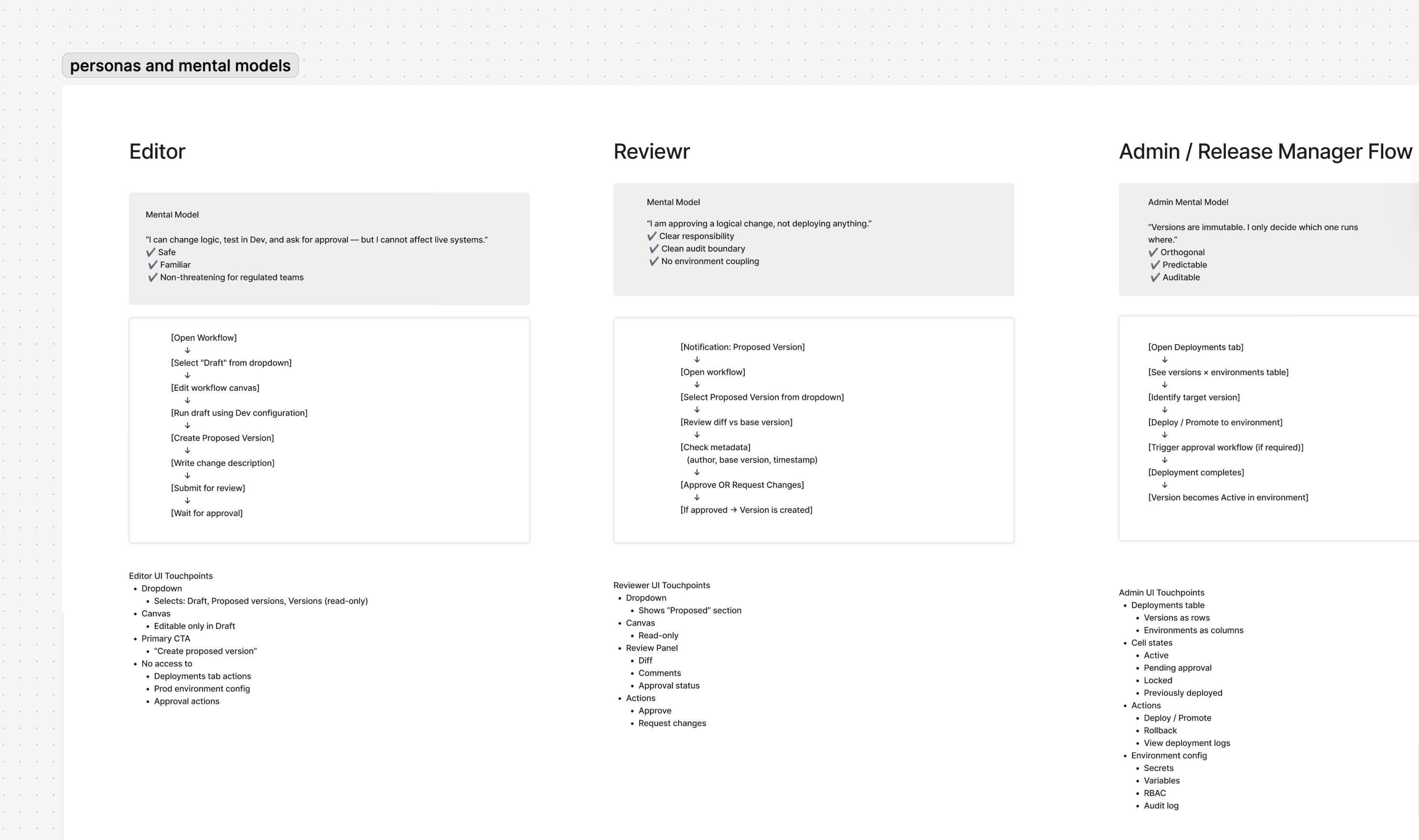
Personas and mental models

We co-designed the solution with users like this customer's (enterprise security and platform teams) so the product reflected how those teams actually govern agent deployments.

DESIGN PROCESS

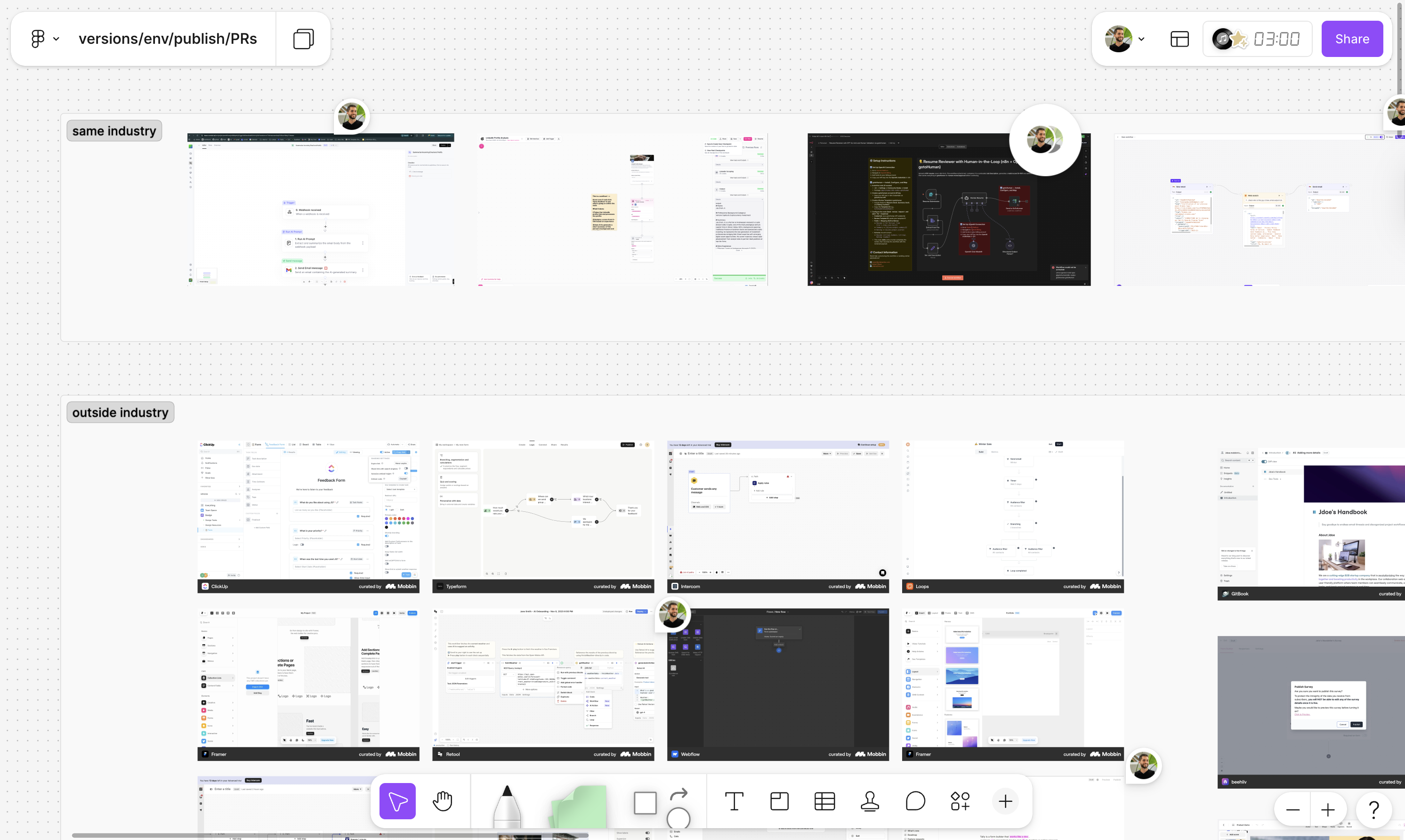
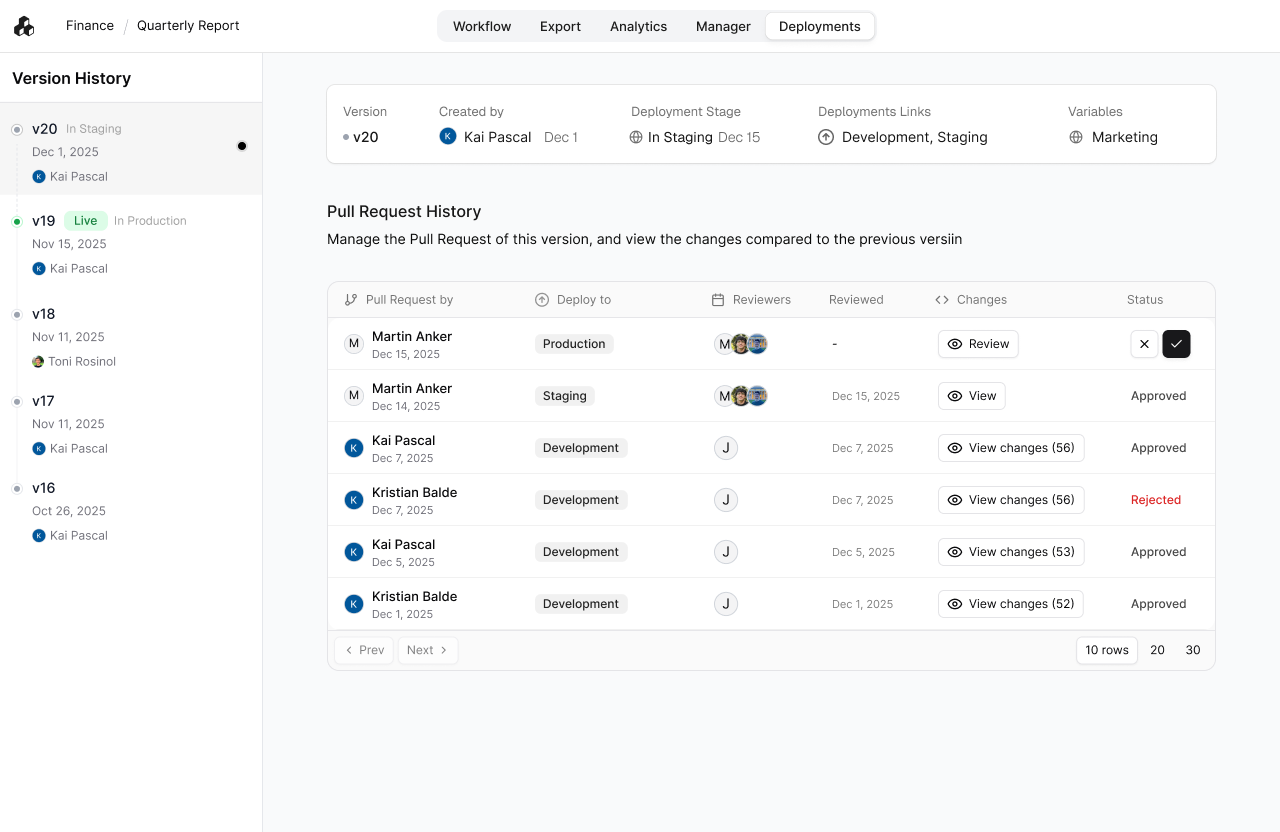
Benchmark, GitBook and other product inspiration Iteration 1, first design iteration Iteration 2, second design iteration Iteration 3, third design iteration

1. Benchmark

Drew from GitBook (not GitHub), aimed for granularity over binary on/off, fixed the naming inconsistency (product said "SDLC", marketing said "ADLC").
Benchmark, GitBook and other product inspiration

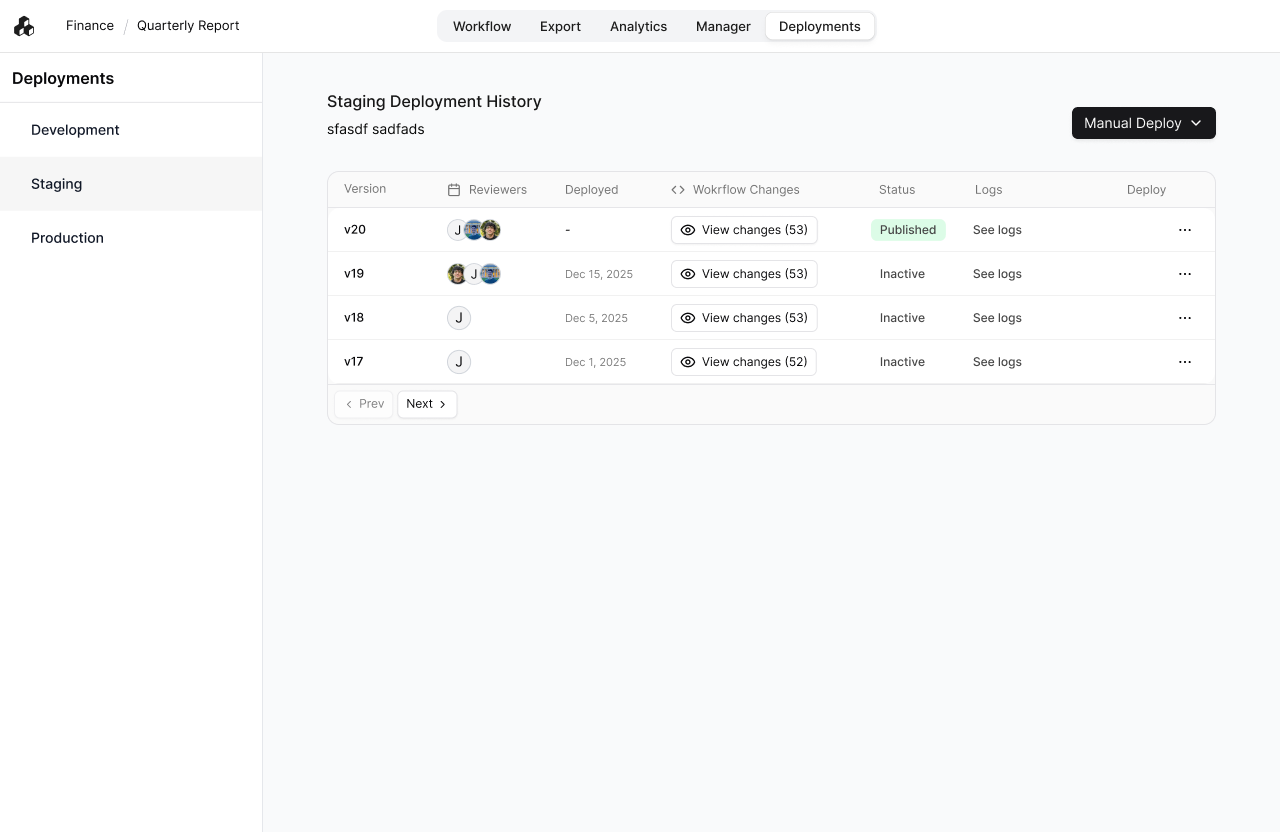
2. Iteration 1

First design iteration, exploring layout, stage granularity, and how ADLC settings map to the existing project model.
Iteration 1, first design iteration

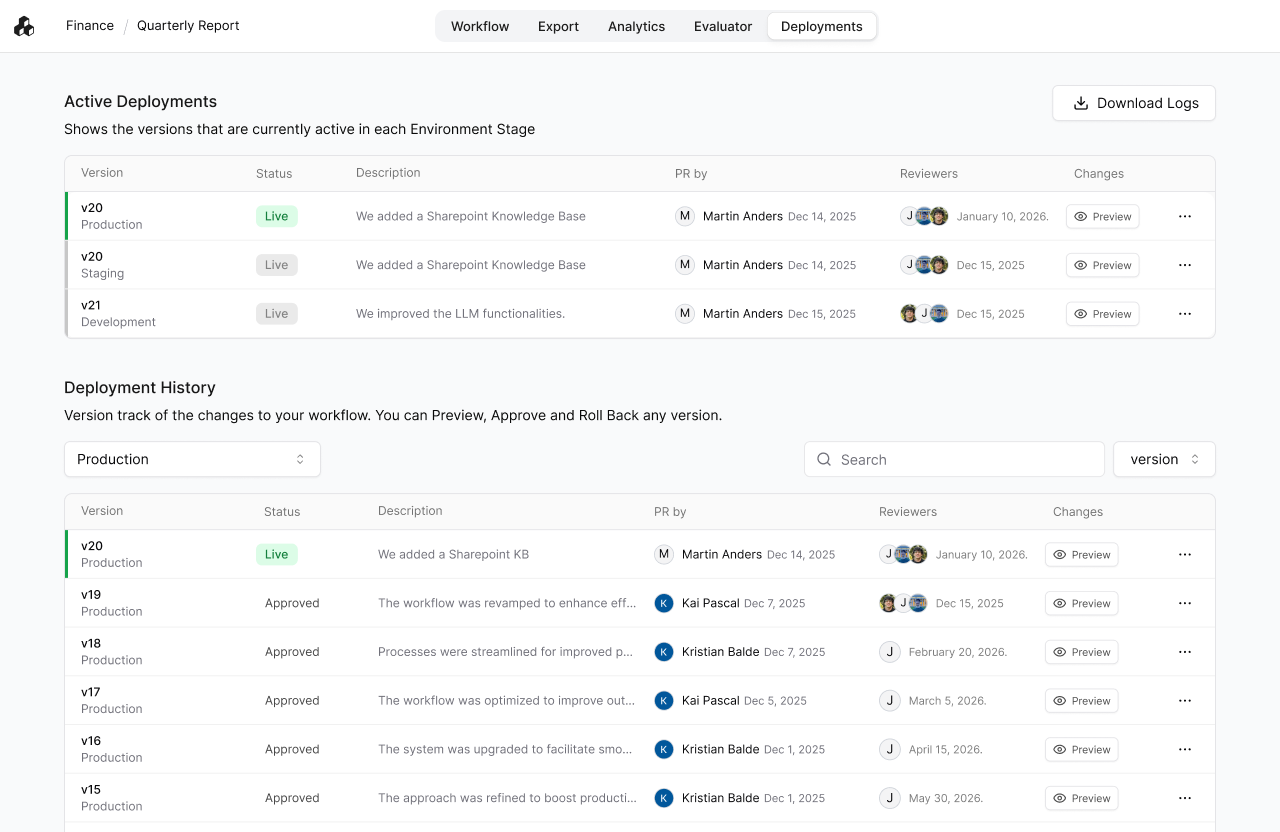
3. Iteration 2

Second iteration, refining environment stages, diff views, and the convert-to-ADLC onboarding flow.
Iteration 2, second design iteration

4. Iteration 3

Third iteration, final direction for per-project settings, approval workflow, and environment variable handling.
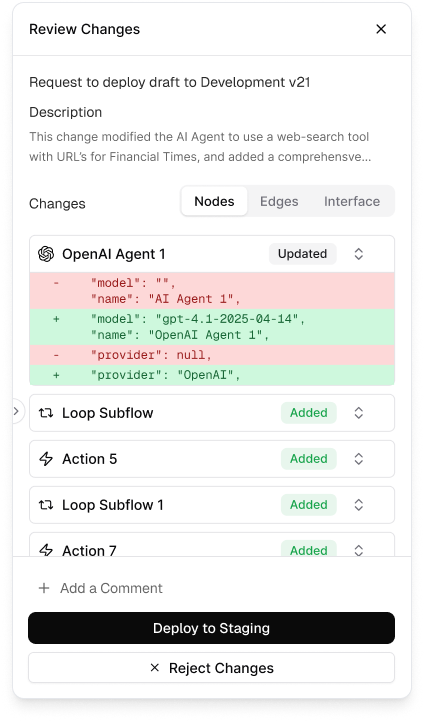
Iteration 3, third design iteration

SOLUTION

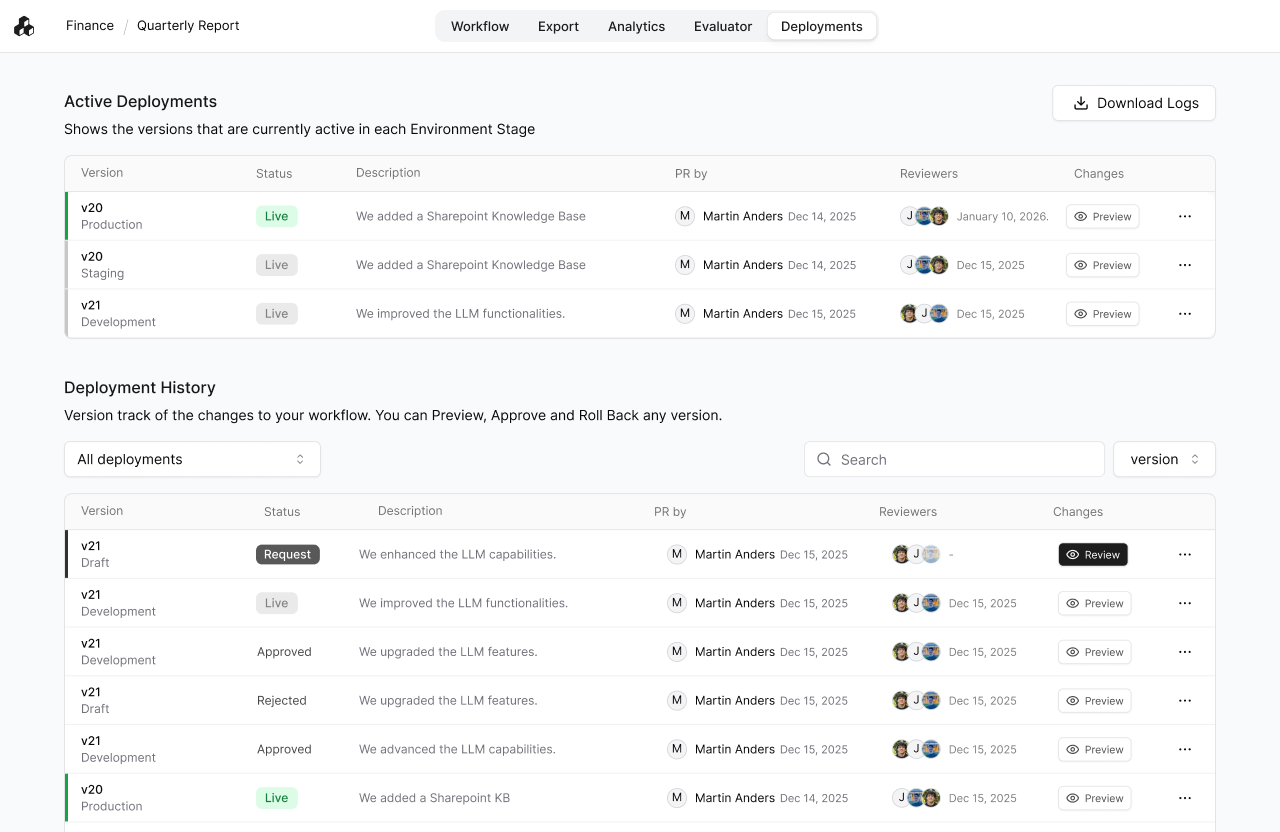
Submit a Pull
Request for Review

Editor users have to request approval to admins when pushing changes to Staging, Development or Production

Review Requests
& Accept Changes

Admins go through the Requests, inspect changes and approve the changes into Production

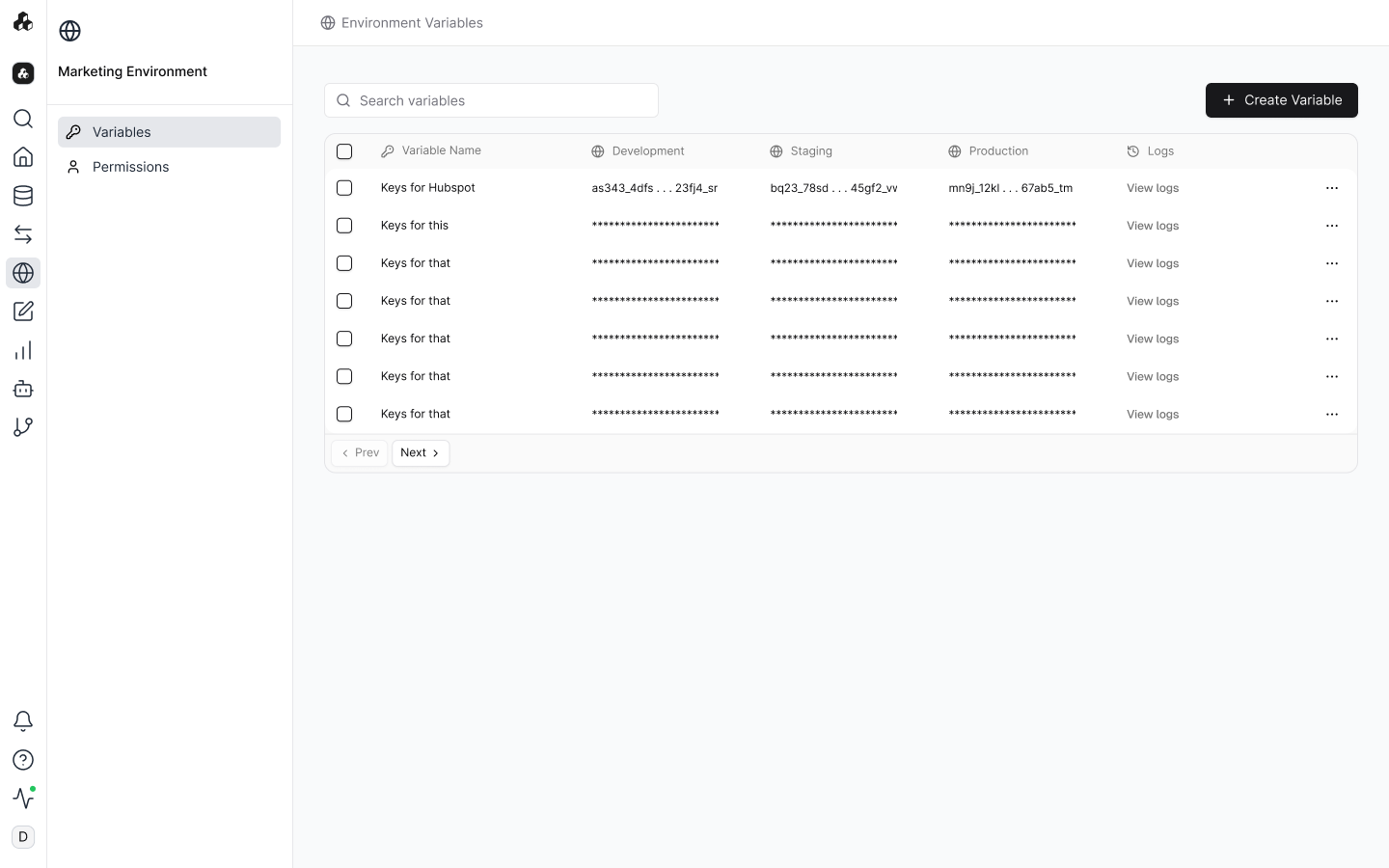
Per-Stage
Environment Variables

Environment variables store configuration values (such as API keys, service URLs, and feature flags) outside your agent workflow. They let the same agent run across development, staging, and production without hardcoding secrets or stage-specific settings.

Share Agents
via Agent Grid

Agent grid is for user builders to share the agentic workflows with users across the organization.

INSIGHTS

Became a standard requirement in every enterprise sales conversation

Concept validated externally before it was built, a customer coined it first

The "I need governance now, but I built this without it" case turned out to be universal

OTHER PROJECTS